Numeracy Literacy through Story Telling and Play based Learning

In this course, you’ll explore how to teach foundational literacy and numeracy skills through stories, play, art, and hands-on experiences. Designed for early childhood educators and practitioners, this course shows how learning can be made engaging, meaningful, and developmentally appropriate for young children. You’ll learn how to use storybooks, rhymes, and role-play to build vocabulary, comprehension, and phonemic awareness, while also introducing key mathematical concepts such as counting, sorting, sequencing, and pattern recognition. Through practical examples and guided activities, the course demonstrates how play-based approaches can help children connect abstract ideas to real-world experiences.
The course also highlights the role of art and sensory learning in deepening understanding, enabling children to visualize and practice core concepts in creative ways. By integrating multiple modalities—storytelling, movement, play, and art—you will be able to design rich learning experiences that support cognitive, language, and social-emotional development. By the end of the course, you will be equipped to design and implement integrated, story-led lessons that combine literacy and numeracy in engaging and inclusive ways, while adapting your approach to suit diverse learners and contexts.
This course is ideal for:
Whether you are new to early childhood education or looking to enhance your teaching practice, this course provides actionable strategies that can be immediately applied in real-world contexts.
By the end of this course, you will be able to:
Want to avail group discounts? Visit our “For Organizations” page to learn more about team enrollments.

Numeracy Literacy through Story Telling and Play based Learning
Numeracy Literacy through Story Telling and Play based Learning
Yumna Shoaib is an experienced early years educator and founder of The Storytellers Club, an…
Numeracy Literacy through Story Telling and Play based Learning
Yumna Shoaib is an experienced early years educator and founder of The Storytellers Club, an…
This module lays out the conceptual and practical foundation for building early language and phonics skills through stories, rhymes, and play-based strategies. Learners will explore how repetition, rhyme, and chants support vocabulary development, oral language, and phonemic awareness in young children. The module also focuses on applying these concepts by designing simple rhyme- or story-based phonics activities. In addition, it highlights how dramatization, movement, and role-play enhance comprehension and engagement, enabling learners to bring stories to life in the classroom. By the end, learners will be able to design and facilitate interactive, story-based learning experiences that support both phonics development and deeper understanding.
Learning Outcomes
By the end of this module, learners will be able to:
This module focuses on strengthening phonics learning through sensory, hands-on, and inclusive approaches. Learners will explore how sensory play deepens understanding of sound-letter relationships and supports engagement in early literacy. The module guides learners to create simple art- and sensory-based activities for specific sounds or letters using everyday materials, making learning both accessible and practical. It also emphasizes adapting phonics games to meet the needs of diverse learners. By the end, learners will be able to design interactive, inclusive phonics activities that reinforce sound-symbol connections effectively.
Learning Outcomes:
This module focuses on building early numeracy skills through stories, play, and everyday experiences. Learners will explore how connecting math concepts to story contexts supports understanding and engagement, and how play fosters mathematical reasoning in young children. The module guides learners to design simple counting and sorting activities using everyday objects, and to plan activities that support pattern recognition and problem-solving. By the end, learners will be able to create engaging, play-based math activities that strengthen foundational numeracy skills.
Learning Outcomes:
By the end of this module, learners will be able to:
This module focuses on using art as a tool to support both literacy and numeracy learning. Learners will explore how art can help visualize concepts such as order, numbers, and sounds, making abstract ideas more concrete for young children. The module guides learners to create sequencing activities that link stories with mathematical thinking, and emphasizes the role of collaborative art in reinforcing both academic skills and social-emotional development. By the end, learners will be able to design purposeful group art activities that integrate literacy and numeracy in engaging and meaningful ways.
Learning Outcomes:
By the end of this module, learners will be able to:
This module focuses on applying integrated teaching approaches through story-based learning. Learners will select a story and design one literacy and one numeracy activity that incorporate play and art-based strategies. The module also emphasizes reflecting on how story-led lessons support both academic learning and social-emotional development, and encourages learners to refine their ideas based on peer feedback. By the end, learners will be able to design, reflect on, and adapt integrated learning experiences that effectively combine literacy, numeracy, and creative engagement.
Learning Outcomes:
By the end of this module, learners will be able to:
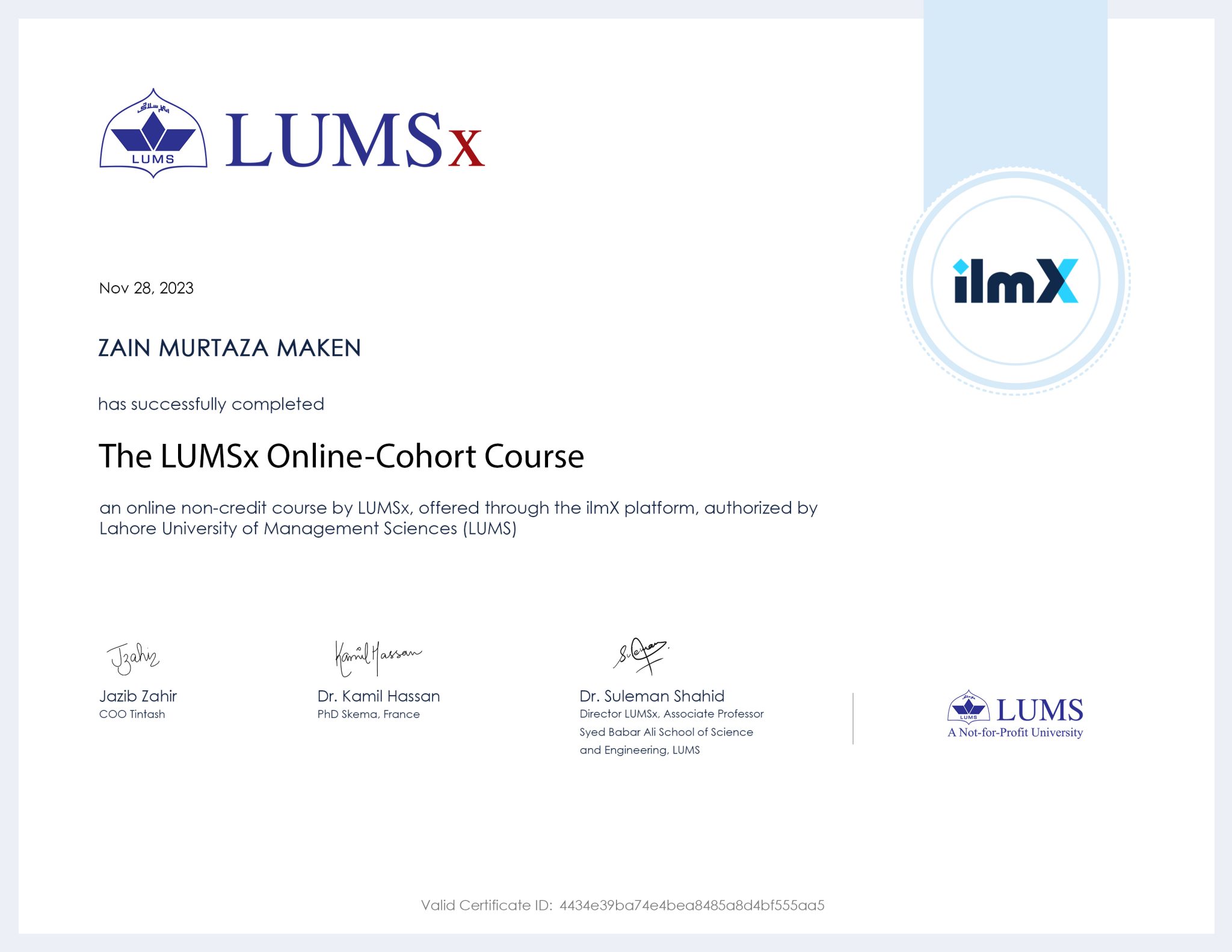
Upon completion of the course, you receive a signed certificate from the institute. You can share this certificate in the certifications section of your LinkedIn profile, on printed resumes, CVs, or other documents.
This course is designed for early childhood educators, aspiring teachers, caregivers, and education practitioners who want to make literacy and numeracy learning more engaging through play. It is ideal for those working with young children in classrooms, learning centers, or home environments, and who are looking for practical, easy-to-apply strategies to support language and early math development in meaningful and inclusive ways.
This is a 2.5-week online course offered in a cohort-based format. It includes short asynchronous video lessons, reflective exercises, practical application tasks, and a post-course live session. Participants can access video content at their own pace while following the scheduled course flow and participating in the live session for discussion and consolidation.
No prior specialization in ECE is required. This course begins with foundational concepts and gradually builds toward application. It is suitable for educators who are new to early years teaching as well as those looking to strengthen their theoretical understanding and classroom practice.
Participants should have access to a laptop, computer, or tablet with audio capability and a stable internet connection. The course will use platforms such as Zoom or Microsoft Teams for the live session. Basic familiarity with online learning platforms will help ensure a smooth learning experience.
Yes. Upon successful completion of all course requirements and assessments, participants will receive a certificate from LUMSx.
Yes. Instructions for requesting a printed certificate will be shared at the end of the course.
If the course is cancelled or postponed due to insufficient enrollment or unforeseen circumstances, a refund will be provided for registration or processing fees paid. Refunds will not be issued if a participant chooses to withdraw voluntarily after enrollment.
Participants must achieve a minimum score of 70% across assignments and assessments to successfully complete the course and receive certification.
No. Participants are expected to complete all modules, videos, and assessments to meet the learning requirements and qualify for certification.
Participants will have access to a dedicated teaching assistant for academic and technical support. The course also includes instructor guidance, discussion opportunities, and feedback on selected tasks. The post-course live session provides an additional space for reflection, clarification, and professional dialogue.
If you are unable to join the current cohort, please check the website for upcoming cohorts. This course will be offered multiple times, allowing you to register for a schedule that best suits you.
Yes. Schools may request a dedicated cohort tailored to their institutional needs. Please contact contactlumsx@lums.edu.pk with your proposal, and a representative will reach out to discuss customization options and scheduling.
When you click on the Enroll Now button, you will be asked to register online. Once you complete registration, you can choose from three payment options:
For technical support or enrollment queries, email support@ilmx.org or use the chat widget on the website. Content-related queries are not supported via this channel.