Skip to content
  • Courses
    • Teaching and Education
      • Effective Teaching Strategies Specialization – (Cohort)
      • AI in the Classroom: Strategies and Tools for Educators – (Cohort)
      • Teaching English as a Second Language – (Cohort)
      • STEM for Educators – (Cohort)
      • Assessment Development – (Cohort)
      • Classroom Management – (Cohort)
      • Differentiated Instruction – (Cohort)
      • Learning how to learn – (Selfpaced)
      • AI in the Classroom: Strategies and Tools for Educators – (Selfpaced)
      • Teaching Practice: Fundamentals of the 5E Model – (Selfpaced)
      • Course Design & Development – (Selfpaced)
      • Fundamentals of Project-Based Learning – (Cohort)
    • Business and Management
      • Project Management Specialization – (Cohort)
      • Project Management (Cohort)
      • The Art of Persuasion: Mastering Interpersonal Dynamics and Negotiations – (Cohort)
      • Business Communication: Transformative Strategies for Professional Growth – (Selfpaced)
      • Project Management – (Selfpaced)
    • Data Science and IT
      • Data Analytics and Visualization with Power BI
      • Data Science Specialization
      • Introduction to Data Science Beginner – (Cohort)
      • Introduction to Data Science Advanced – (Cohort)
      • Machine Learning – (Cohort)
      • Machine Learning – (Selfpaced)
    • Personal Development
      • Health and Wellness – A Manual – (Selfpaced)
      • فارسی سیکھیں – ایک تعارفی آن لائن کورس – (Selfpaced)
      • پشتو زبان سیکھیں:ایک آن لائن ابتدائ کورس – (Selfpaced)
    • All Courses
  • Specializations
    • Data Science Specialization
    • Effective Teaching Strategies Specialization
    • Project Management Specialization
    • Early Childhood Education Specialization
  • Live Online
    • Video Creation for Digital Media
    • Robotic Process Automation (RPA) for Professionals
    • Python for Beginners
    • Microsoft Excel for Finance Professionals
    • Interior Design Masterclass
    • Essential Skills for First-Time Managers
    • Retail Marketing in the Digital World
    • English for Work
  • Free Courses
    • Introduction to Political Theory
    • Paradigms of Brain Function
    • Quantum Physics for Beginners
    • Discrete Mathematics
    • Probability
  • For Organizations
  • About
    • About Us
    • Events
    • Partners
    • Faculty
    • Resources
      • Newsletter
      • Blog
      • LUMSx Studio
      • Nexus 2025
    • FAQs
  • Support
  • Courses
    • Teaching and Education
      • Effective Teaching Strategies Specialization – (Cohort)
      • AI in the Classroom: Strategies and Tools for Educators – (Cohort)
      • Teaching English as a Second Language – (Cohort)
      • STEM for Educators – (Cohort)
      • Assessment Development – (Cohort)
      • Classroom Management – (Cohort)
      • Differentiated Instruction – (Cohort)
      • Learning how to learn – (Selfpaced)
      • AI in the Classroom: Strategies and Tools for Educators – (Selfpaced)
      • Teaching Practice: Fundamentals of the 5E Model – (Selfpaced)
      • Course Design & Development – (Selfpaced)
      • Fundamentals of Project-Based Learning – (Cohort)
    • Business and Management
      • Project Management Specialization – (Cohort)
      • Project Management (Cohort)
      • The Art of Persuasion: Mastering Interpersonal Dynamics and Negotiations – (Cohort)
      • Business Communication: Transformative Strategies for Professional Growth – (Selfpaced)
      • Project Management – (Selfpaced)
    • Data Science and IT
      • Data Analytics and Visualization with Power BI
      • Data Science Specialization
      • Introduction to Data Science Beginner – (Cohort)
      • Introduction to Data Science Advanced – (Cohort)
      • Machine Learning – (Cohort)
      • Machine Learning – (Selfpaced)
    • Personal Development
      • Health and Wellness – A Manual – (Selfpaced)
      • فارسی سیکھیں – ایک تعارفی آن لائن کورس – (Selfpaced)
      • پشتو زبان سیکھیں:ایک آن لائن ابتدائ کورس – (Selfpaced)
    • All Courses
  • Specializations
    • Data Science Specialization
    • Effective Teaching Strategies Specialization
    • Project Management Specialization
    • Early Childhood Education Specialization
  • Live Online
    • Video Creation for Digital Media
    • Robotic Process Automation (RPA) for Professionals
    • Python for Beginners
    • Microsoft Excel for Finance Professionals
    • Interior Design Masterclass
    • Essential Skills for First-Time Managers
    • Retail Marketing in the Digital World
    • English for Work
  • Free Courses
    • Introduction to Political Theory
    • Paradigms of Brain Function
    • Quantum Physics for Beginners
    • Discrete Mathematics
    • Probability
  • For Organizations
  • About
    • About Us
    • Events
    • Partners
    • Faculty
    • Resources
      • Newsletter
      • Blog
      • LUMSx Studio
      • Nexus 2025
    • FAQs
  • Support

Our Live Online Courses are Now Live! Learn More

Introduction to Python

By Dr. Malik Jahan Khan & Dr. Maryam Abdul Ghafoor

About this Course

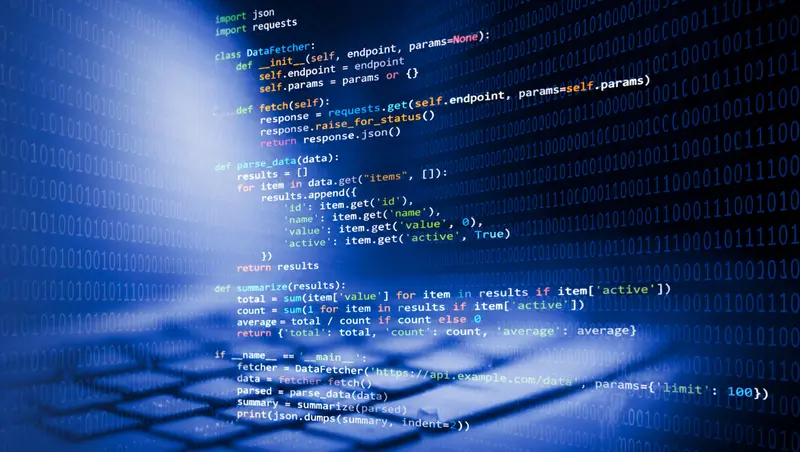
Introduction to Python is a beginner-friendly course designed for learners who want to start programming with no prior coding experience. The course focuses on building computational thinking and problem-solving skills, using Python as a practical tool for turning ideas into working programs.

Learners begin by understanding how complex problems can be broken down into clear, logical steps and expressed as algorithms. From there, the course gradually introduces essential programming concepts including variables, data types, conditionals, loops, and functions. Each concept is explained through practical examples and hands-on exercises that emphasize understanding how programs work.

As learners progress, they work with richer data structures such as lists, dictionaries, and files, and learn how to write structured and reusable code. The course also introduces recursion as a powerful way of solving problems by breaking them into smaller parts. In the final modules, learners explore data manipulation and visualization using Python libraries such as NumPy and matplotlib.

By the end of the course, learners will be able to design, write, and debug Python programs independently, building a strong foundation for further learning in programming, data science, and related fields.

Who is this course for?

This course is designed for anyone who wants to learn programming from the ground up and develop strong problem-solving skills using Python. It is a good fit if you are:

  1. New to programming and looking for a structured, beginner-friendly introduction that starts with the fundamentals and gradually builds your confidence in writing code.
  2. An undergraduate student from a non-computing discipline—such as business, economics, social sciences, or the natural sciences—who wants to develop basic programming and computational thinking skills.
  3. A student or recent graduate who wants to gain a practical introduction to Python and build a foundation that can support further learning in programming, data science, or technology-related fields.
  4. An educator or professional who would like to understand how programming works and develop the ability to think through problems using computational logic.
  5. Simply curious about coding and interested in learning how to translate ideas into working programs while strengthening your analytical and problem-solving abilities.

Cohort Features

  • 2 Live Sessions with Instructors  
  • Hands On Coding Practice
  • Teaching Team Support
  •  Peer Interactions

What Will You Learn

By the end of this course, you will be able to:

  1. Understand computational thinking: explain how complex problems can be broken down into clear, logical steps and translated into algorithms that computers can execute.
  2. Write Python programs from scratch: set up a Python environment and build simple programs using variables, data types, and operators to perform computations.
  3. Control program logic: use conditional statements and loops to control the flow of programs, automate repetitive tasks, and process data efficiently.
  4. Organize code effectively: design and implement functions to structure programs into reusable and well-organized components.
  5. Work with common data structures: manipulate strings, files, lists, and dictionaries to store, process, and manage different types of data.
  6. Analyze structured data: work with collections of data, including tabular and grid-based data structures, to perform basic analysis and transformations.
  7. Solve problems using recursion: apply recursive thinking to problems that can be solved by breaking them into smaller, self-similar parts.
  8. Work with numerical data and visualizations: perform basic numerical operations using NumPy and create simple visualizations using matplotlib to explore and present data.
  9. Debug and improve programs: identify errors, refine logic, and improve the correctness and clarity of Python code.

Skills You Will Gain

  • Python Programming
  • Computational Thinking
  • Algorithmic Problem Solving
  • Data Structures in Python
  • Data Analysis with NumPy
  • Data Visualization with Matplotlib

FORMAT

Online Cohort

START DATE

Jun 30, 2026

Registration Deadline

Jun 24, 2026

LANGUAGE

English, Urdu

DURATION

6 Weeks

QUANTITY

1

PRICE

PKR. 25,000

Enroll Now
Enroll Now
  • Installment payment plans available

Installment payment plans available

Enroll as a Team

Want to avail group discounts? Visit our “For Organizations” page to learn more about team enrollments.
How Will You Learn?

1

Explore this course

Explore this course led by industry leaders, providing an immersive and interactive learning environment.

2

Enroll for the Upcoming Cohort

Secure your spot by registering for the upcoming cohort/session, ensuring you don’t miss out on the live experience.

3

Participate Live and Self-Paced

Engage in real-time/ live discussions, while completing pre-recorded lectures as well

4

Earn Your Certificate

Successfully complete the course to receive a certificate, showcasing your skills.

Our Instructor(s)

Dr. Malik Jahan Khan

Faculty Member, Syed Babar Ali School of Science & Engineering, LUMS

Dr. Malik Jahan Khan holds a PhD in Computer Science from the Syed Babar Ali School of Science and Engineering at LUMS (2012). His research interests include machine learning, autonomic computing, and the application of AI in agriculture and rural sector. He has led and contributed to research projects funded by different national and international funding agencies. Dr. Khan is currently a full-time faculty member of the Computer Science Department at LUMS. He has over a decade of teaching experience. A strong advocate of student-centric and discovery-oriented learning, he has taught courses ranging from programming fundamentals to machine learning.

Learn more

Additional Information

  • Linkedin

Dr. Malik Jahan Khan

Faculty Member, Syed Babar Ali School of Science & Engineering, LUMS

Dr. Malik Jahan Khan holds a PhD in Computer Science from the Syed Babar Ali School of Science and Engineering at LUMS (2012). His research interests include machine learning, autonomic computing, and the application of AI in agriculture and rural sector. He has led and contributed to research projects funded by different national and international funding agencies. Dr. Khan is currently a full-time faculty member of the Computer Science Department at LUMS. He has over a decade of teaching experience. A strong advocate of student-centric and discovery-oriented learning, he has taught courses ranging from programming fundamentals to machine learning.

Additional Information

  • Linkedin

Course(s) Taught

Introduction to Python

View Less

Dr. Maryam Abdul Ghafoor

Assistant Professor, Syed Babar Ali School of Science & Engineering, LUMS

Dr. Maryam Abdul Ghafoor is an Assistant Professor at the Lahore University of Management Sciences (LUMS), specializing in Software Engineering with a focus on Program Analysis. She holds a PhD from LUMS and has over 6 years of teaching experience at institutions including FAST-NUCES (Islamabad and Lahore campuses) and Capital University of Science and Technology (CUST), Islamabad. Her research focuses on program analysis techniques and their applications in software engineering.

Learn more

Additional Information

  • Linkedin

Dr. Maryam Abdul Ghafoor

Assistant Professor, Syed Babar Ali School of Science & Engineering, LUMS

Dr. Maryam Abdul Ghafoor is an Assistant Professor at the Lahore University of Management Sciences (LUMS), specializing in Software Engineering with a focus on Program Analysis. She holds a PhD from LUMS and has over 6 years of teaching experience at institutions including FAST-NUCES (Islamabad and Lahore campuses) and Capital University of Science and Technology (CUST), Islamabad. Her research focuses on program analysis techniques and their applications in software engineering.

Additional Information

  • Linkedin

Course(s) Taught

View Less

Dr. Malik Jahan Khan

Faculty Member, Syed Babar Ali School of Science & Engineering, LUMS

Courses Taught

Introduction to Python

Dr. Malik Jahan Khan

Faculty Member, Syed Babar Ali School of Science & Engineering, LUMS

Dr. Malik Jahan Khan holds a PhD in Computer Science from the Syed Babar Ali…

Dr. Malik Jahan Khan holds a PhD in Computer Science from the Syed Babar Ali School of Science and Engineering at LUMS (2012). His research interests include machine learning, autonomic computing, and the application of AI in agriculture and rural sector. He has led and contributed to research projects funded by different national and international funding agencies. Dr. Khan is currently a full-time faculty member of the Computer Science Department at LUMS. He has over a decade of teaching experience. A strong advocate of student-centric and discovery-oriented learning, he has taught courses ranging from programming fundamentals to machine learning.

Courses Taught

Introduction to Python

Dr. Malik Jahan Khan

Faculty Member, Syed Babar Ali School of Science & Engineering, LUMS

Dr. Malik Jahan Khan holds a PhD in Computer Science from the Syed Babar Ali…

Dr. Malik Jahan Khan holds a PhD in Computer Science from the Syed Babar Ali School of Science and Engineering at LUMS (2012). His research interests include machine learning, autonomic computing, and the application of AI in agriculture and rural sector. He has led and contributed to research projects funded by different national and international funding agencies. Dr. Khan is currently a full-time faculty member of the Computer Science Department at LUMS. He has over a decade of teaching experience. A strong advocate of student-centric and discovery-oriented learning, he has taught courses ranging from programming fundamentals to machine learning.

Dr. Maryam Abdul Ghafoor

Assistant Professor, Syed Babar Ali School of Science & Engineering, LUMS

Courses Taught

Dr. Maryam Abdul Ghafoor

Assistant Professor, Syed Babar Ali School of Science & Engineering, LUMS

Dr. Maryam Abdul Ghafoor is an Assistant Professor at the Lahore University of Management Sciences…

Dr. Maryam Abdul Ghafoor is an Assistant Professor at the Lahore University of Management Sciences (LUMS), specializing in Software Engineering with a focus on Program Analysis. She holds a PhD from LUMS and has over 6 years of teaching experience at institutions including FAST-NUCES (Islamabad and Lahore campuses) and Capital University of Science and Technology (CUST), Islamabad. Her research focuses on program analysis techniques and their applications in software engineering.

Courses Taught

Teaching English

Dr. Maryam Abdul Ghafoor

Assistant Professor, Syed Babar Ali School of Science & Engineering, LUMS

Dr. Maryam Abdul Ghafoor is an Assistant Professor at the Lahore University of Management Sciences…

Dr. Maryam Abdul Ghafoor is an Assistant Professor at the Lahore University of Management Sciences (LUMS), specializing in Software Engineering with a focus on Program Analysis. She holds a PhD from LUMS and has over 6 years of teaching experience at institutions including FAST-NUCES (Islamabad and Lahore campuses) and Capital University of Science and Technology (CUST), Islamabad. Her research focuses on program analysis techniques and their applications in software engineering.

Guest Instructors

Course Outline

Module 1: Computational Thinking and Playing with Data

In this module, learners are introduced to the foundations of programming and computational thinking. They explore how complex problems can be broken down into smaller logical steps and expressed as algorithms. The module also introduces learners to the Python programming environment and basic programming constructs such as variables, data types, and simple input/output operations. By the end of the module, learners will understand how Python programs are structured and how data can be represented and manipulated in code.

Learning Outcomes

  • Explain the concept of computational thinking and its role in problem solving
  • Set up and run simple Python programs
  • Use variables and basic data types to store and manipulate information
  • Perform simple computations using Python operators
  • Work with strings and Boolean expressions to represent and evaluate information

Testing and Learning Modules

4 Video Lessons

Practice Exercises

Graded Quiz

Module estimated time: 1 hour 30 minutes

Module 2: Conditions and Decisions   

This module focuses on decision-making in programming. Learners explore how programs can evaluate conditions and execute different instructions depending on the result. Through conditional statements and Boolean logic, learners learn how to control the flow of a program and design solutions that respond to different inputs or situations.

Learning Outcomes

  • Use conditional statements to control program execution
  • Write programs using if, elif, and else statements
  • Construct logical expressions to evaluate conditions
  • Trace and debug programs that include conditional logic

Testing and Learning Modules

2 Videos

Practice Exercises

Graded Quiz

Coding Task

Module estimated time: 2 hours

Module 3: Divide and Conquer with Functions

In this module, learners explore how functions allow programmers to break large problems into smaller, reusable components. They learn how to define functions, pass inputs as parameters, and return results. This module emphasizes writing modular, organized programs that are easier to maintain and reuse.

Learning Outcomes

  1. Define and use functions in Python
  2. Pass parameters to functions and return results
  3. Organize programs into reusable components
  4. Analyze and debug function-based programs

Testing and Learning Modules

2 Video Lessons

Practice Exercises

Graded Quiz

Coding Tasks

Module estimated time: 1 Hour 30 minutes

Module 4:  Automating Repetition with Loops

This module introduces loops, which allow programmers to automate repetitive tasks efficiently. Learners explore while loops and for loops, understand how iteration works, and practice writing programs that process repeated operations. The module also covers nested loops and debugging common looping errors.

Learning Outcomes

  • Implement repetition using while and for loops
  • Control loop execution using conditions and ranges
  • Trace the execution of programs containing loops
  • Use nested loops to solve more complex problems
  • Identify and fix common loop-related errors

Testing and Learning Modules

3 Videos Lessons

Practice Exercises

Graded Quiz

Coding Tasks

Live Session 1

Module estimated time: 2 hours and 30 minutes

Module 5 – Working with Text and Files 

This module focuses on handling textual data and working with files in Python. Learners explore how to manipulate strings, process text data, and read from or write to files. These skills allow programs to store information, process real-world data, and interact with external resources.

Learning Outcomes

  • Manipulate strings using built-in Python methods
  • Extract and transform textual data
  • Read from and write to text files
  • Process file content using loops and string operations

Testing and Learning Modules

2 Video Lessons

Practice Exercises

Graded Quiz

Coding Tasks

Module estimated time: 1hour 30 minutes

Module 6 – Scaling Up with Larger Volumes of Data 

In this module, learners begin working with collections of data using lists. They explore how lists store multiple values, how to modify them, and how to process list data using loops. The module also introduces important programming concepts such as mutable vs immutable data and basic searching and sorting techniques.

Learning Outcomes

  • Create and manipulate lists in Python
  • Iterate through lists using loops
  • Understand mutable and immutable data types
  • Implement simple searching and sorting operations

Testing and Learning Modules

4 Video Lessons

Practice Exercises

Graded Quiz

Coding Tasks

Module estimated time: 3 hours

Module 7: Computational Thinking Beyond Linear Data Organization

This module introduces two-dimensional data structures that represent tables or grids of information. Learners explore how nested lists can represent structured data and how nested loops can be used to process rows and columns of information.

Learning Outcomes

  • Represent tabular data using two-dimensional lists
  • Access and modify elements within grids
  • Use nested loops to process structured data
  • Extract insights from grid-based datasets

Testing and Learning Modules

2 Video Lessons

Practice Exercises

Graded Quiz

Coding Tasks

Module estimated time: 1 hour 30 minutes

Module 8: Thinking Recursively

This module introduces recursion as a powerful programming concept where functions call themselves to solve problems. Learners explore how recursive solutions work, how to design recursive functions, and how to debug common recursion-related errors.

Learning Outcomes

  • Understand the concept of recursion
  • Identify base cases and recursive cases
  • Implement recursive solutions to common problems
  • Analyze and debug recursive programs

Testing and Learning Modules

2 Video Lessons

Practice Exercises

Graded Quiz

Coding Tasks

Module estimated time: 3 hours

Module 9: Associating Keys with Values

This module introduces dictionaries, a powerful data structure for storing and organizing information using key-value pairs. Learners explore how dictionaries differ from other data structures and how they can be used to solve real-world programming problems efficiently.

Learning Outcomes

  • Create and use dictionaries in Python
  • Retrieve and modify dictionary data using keys
  • Compare dictionaries with lists and sets
  • Build simple applications using dictionary-based data structures

Testing and Learning Modules

3 Video Lessons

Practice Exercises

Graded Quiz

Coding Tasks

Module estimated time: 1 hour 30 minutes

Module 10: Data Manipulation and Visualization

In the final technical module, learners explore how Python can be used for basic data analysis and visualization. They learn how to manipulate numerical data using NumPy and create visualizations using matplotlib, allowing them to analyze and communicate insights from data.

Learning Outcomes

  • Perform numerical computations using NumPy arrays
  • Manipulate and transform datasets programmatically
  • Create visualizations such as line charts, bar charts, and scatter plots
  • Interpret visual outputs to understand data trends

Testing and Learning Modules

2 Video Lessons

Practice Exercises

Graded Quiz

Coding Tasks

Live Session 2

Module estimated time: 3 hours

Shareable Certificate

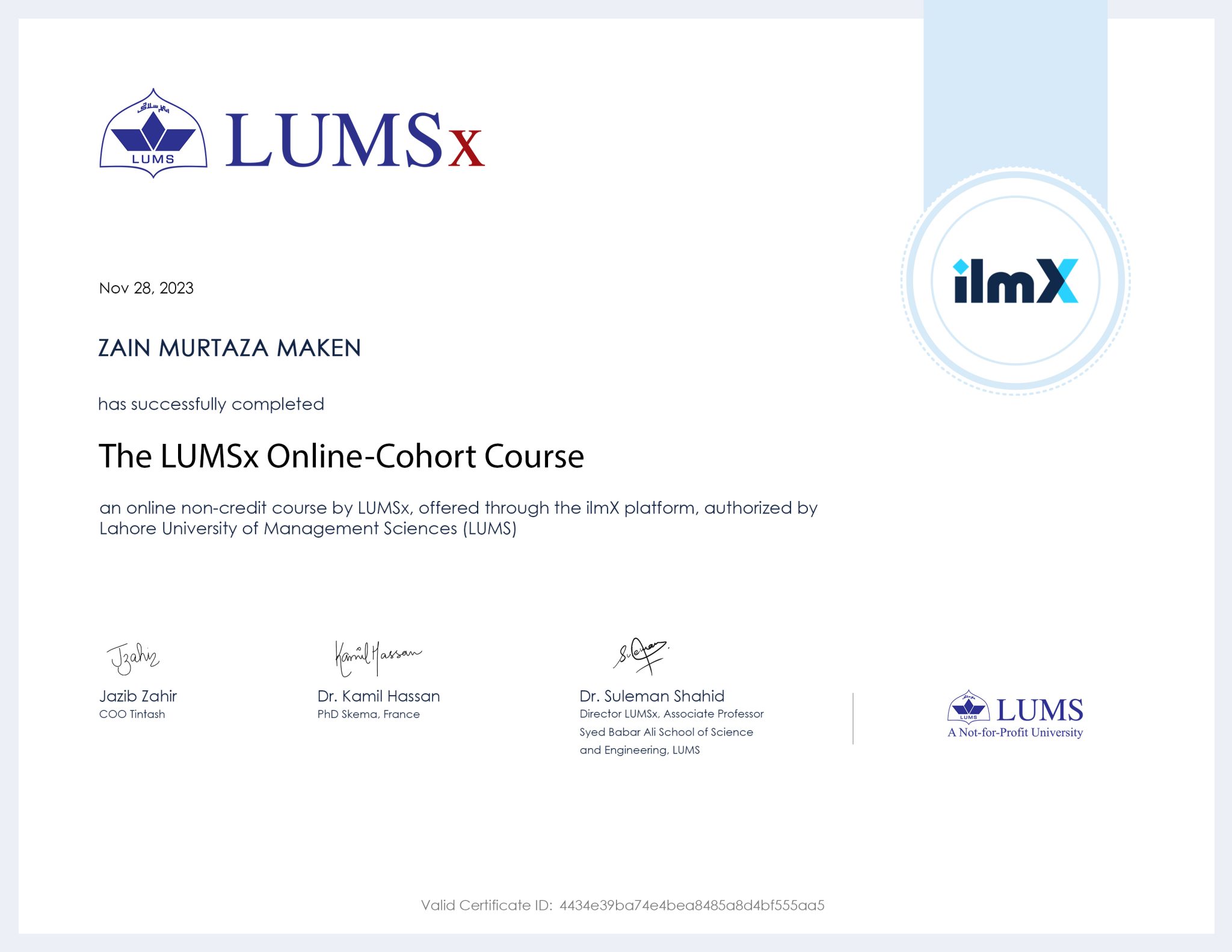
Upon completion of the course, you receive a signed certificate from the institute. You can share this certificate in the certifications section of your LinkedIn profile, on printed resumes, CVs, or other documents.
Download Course Outline
Your digital certificate will be issued in your legal name and emailed to you at no additional cost, upon completion of the program, per the stipulated requirements.

Frequently Asked Questions

Who is this course designed for?

This course is designed for learners who want to develop practical, job-ready skills in programming with Python. It is ideal for aspiring software developers, data enthusiasts, early-career professionals, and students looking to build a strong foundation in coding and problem-solving using Python.

Whether you are new to programming or looking to strengthen your Python skills, this course provides a structured pathway—from basic programming concepts to hands-on projects and real-world applications. It is also well suited for professionals preparing for coding assessments, automation tasks, or anyone seeking to leverage Python for data handling, scripting, or application development.

Are there any prerequisites for this course?

No formal prerequisites are required. Learners should be comfortable using a computer and navigating basic software tools. Prior exposure to programming or coding concepts can be helpful, but all core Python concepts—including variables, control structures, functions, and data structures—are introduced step by step within the course.

Is this course entirely online?

Yes, this course is entirely online. It includes both self-paced and live-online sessions.

What is a cohort course?

A cohort course combines elements of both asynchronous learning (through pre-recorded videos and materials that you can access at your own pace) and synchronous learning (live classes and interactive sessions scheduled at specific times).

What is the purpose of live classes?

The live classes provide an opportunity for real-time interaction with the instructor and peers, discussion of course material, clarification of doubts, and engaging in interactive learning activities.

How can we access the required reading materials and assignments?

Participants will find all necessary reading materials and assignments on the LUMSx Learning Management System (LMS). Access to the LMS will be granted upon completion of the enrollment process for the workshop. It is important to note that course materials will be made accessible in the week leading up to the commencement of the workshop, ensuring participants have ample time to familiarize themselves with the content before the official start.

Can I collaborate with other learners in this course?

While discussion and collaboration with peers is encouraged to foster a learning community, sharing or copying code/solutions is strictly prohibited. Any collaboration should be limited to discussing concepts and should not involve sharing actual code or solutions.

How much do I have to score to pass this score?

You have to score at least 70% to pass this course.

Will I get a certificate at the end of this course?

Yes, you will get a certificate at the end of this course.

Can I skip any videos and assessments and still get a certificate?

No, you must watch all the videos and attempt all the assessments to get a course certificate.

Who should I contact if I have additional questions?

Please forward any queries to our team on the chat widget or email your query to us at support@ilmx.org. We will only be responding to technical support queries. Content related queries cannot be entertained at the moment.

How can I pay for this course?

When you click on the Enroll Now button, you will be asked to register online. Once you complete registration, you can choose from three payment options: 

  1. Pay via bank: Instantly download a fee voucher for hassle-free bank deposits. After payment confirmation, you’ll receive access to the learning management system within 24 hours.  
  1. Pay online: Generate a voucher with a single click and complete payment swiftly. Access is granted within 24 hours of confirmation.  
  1. Pay in installments: LUMSx partners with KalPay Taleem to offer installment options. Complete registration and select “Pay in installments.” For more info, contact taleem@kalpayfinancials.com or call 0328 3044414.  

Explore Similar Courses

Click Me

Don't miss out on this upcoming course.

Get early access by joining the waitlist!

Introduction to Python

Sign up for updates

Get exclusive course launch notifications

    Online Cohort

    Introduction to Python

    Dr. Malik Jahan Khan & Dr. Maryam Abdul Ghafoor
    • PKR 25,000
    • Jun 30, 2026
    Click Me

    Don't miss out on this upcoming course.

    Get early access by joining the waitlist!

    Introduction to Python

    Sign up for updates

    Get exclusive course launch notifications

      Online Cohort

      Introduction to Python

      Dr. Malik Jahan Khan & Dr. Maryam Abdul Ghafoor
      • PKR 25,000
      • Jun 30, 2026
      Click Me

      Don't miss out on this upcoming course.

      Get early access by joining the waitlist!

      Introduction to Python

      Sign up for updates

      Get exclusive course launch notifications

        Online Cohort

        Introduction to Python

        Dr. Malik Jahan Khan & Dr. Maryam Abdul Ghafoor
        • PKR 25,000
        • Jun 30, 2026
        Click Me

        Don't miss out on this upcoming course.

        Get early access by joining the waitlist!

        Introduction to Python

        Sign up for updates

        Get exclusive course launch notifications

          Online Cohort

          Introduction to Python

          Dr. Malik Jahan Khan & Dr. Maryam Abdul Ghafoor
          • PKR 25,000
          • Jun 30, 2026

          Introduction to Python

          By Dr. Malik Jahan Khan & Dr. Maryam Abdul Ghafoor
          Enroll Now
          Receive the latest updates on our courses, webinars, podcasts and more

          Site Map

          • Courses
          • For Organizations
          • Events
          • Courses
          • For Organizations
          • Events

          About

          • About Us
          • Partners
          • Faculty
          • FAQs
          • About Us
          • Partners
          • Faculty
          • FAQs

          Address: LUMSx, SBASSE Basement, LUMS, Phase 5 D.H.A, Lahore, Punjab 54792

          Questions? Email us at contactlumsx@lums.edu.pk 

          or call us on +92 42 3560 8000 | Ext: 8567 or 0321-0667775

          Facebook-f Instagram Youtube Linkedin-in

          2026 (C) Lahore University of Management Sciences. All Rights Reserved

          • PRIVACY POLICY

          Get the Course Outline!

          Enter your email address below to receive the full course outline directly in your inbox. Stay informed about what you'll be learning and all the key dates!

            Register Your Interest